
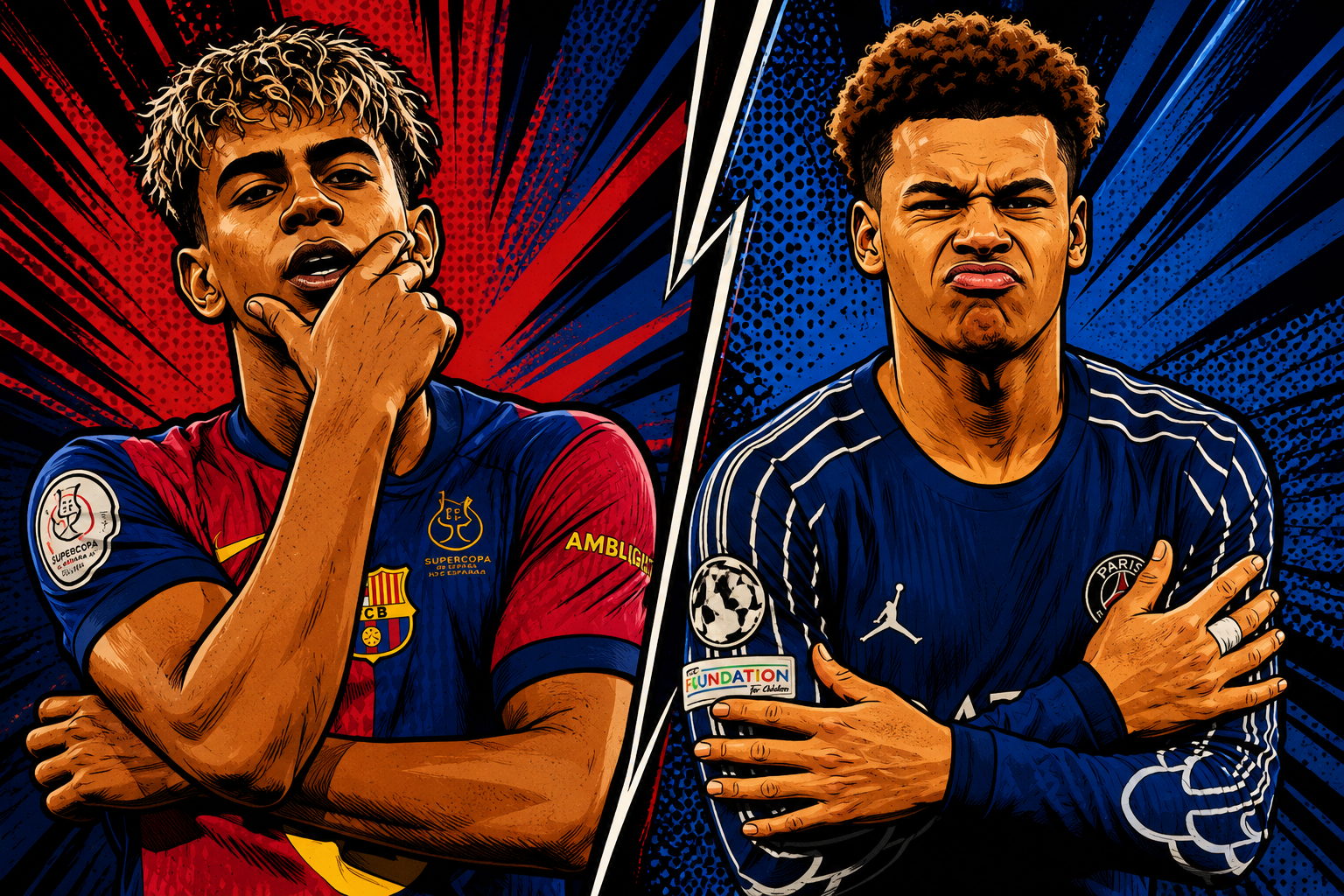
From Lamine Yamal to Wayne Rooney — football has always produced world-class athletes. Some of them are given the chance to debut before their peers, while others wait years for their breakthrough moment. Over the decades, we have seen countless examples of both paths, but what is actually considered the “normal” age for a footballer to make their debut and establish themselves as a starter for their club? Let’s take a look at what the numbers and history tell us.
In the Past
Many legendary footballers made their debuts at the age of 16 or 17 and went on to reach the very top of the sport. The examples are endless — from Diego Maradona making his debut at just 15 years old in Argentina, to the youngest player ever to win the World Cup: Pelé, who lifted the trophy at the age of 17 years and 249 days.
The youngest-ever Ballon d’Or winner remains Ronaldo Nazário, who won the award at only 21 years old. Another legendary striker, Michael Owen, claimed the award at 22. Cristiano Ronaldo won his first Ballon d’Or at 23, while Lionel Messi earned the first of his eight Ballon d’Or titles at the age of 22. Meanwhile, Wayne Rooney became the youngest goalscorer in Premier League history at the time when he scored that unforgettable winner against Arsenal at just 16 years old.
Of course, football history also remembers several disappointments. Freddy Adu is perhaps the first name that comes to mind. He became the youngest athlete in any American sport to sign a professional contract, doing so at only 14 years old. What followed, however, was a journey through 15 clubs across 9 different countries, including trials with Manchester United, before his career faded away far too early at the age of 31.
Serie A
Serie A has produced some incredible talents over the years. Valeri Bojinov became the youngest foreign player to appear in an official Serie A match when he debuted for Lecce in January 2002 at just 15 years old. A transfer to Fiorentina followed, and later a move to Juventus. Bojinov also played in the Premier League and the Portuguese league before eventually returning to Italy. Throughout his career, however, constant injuries and several off-field controversies prevented him from fully reaching his potential. In the end, he retired after representing 18 different clubs — a truly sad outcome for such a promising talent.
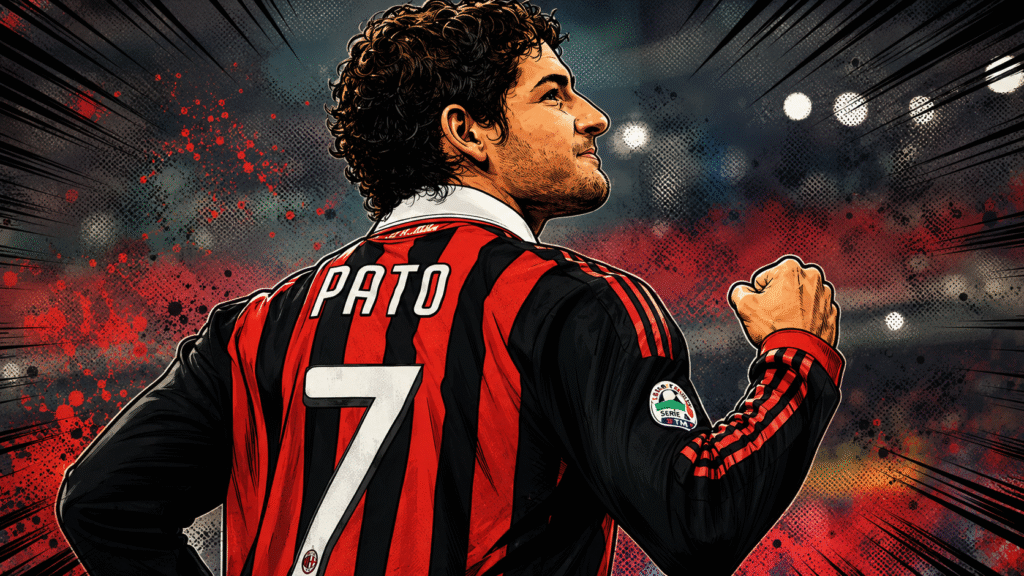
Another Serie A talent with a similar story is Alexandre Pato. In 2006, the Brazilian broke the record for the youngest footballer to score in a FIFA tournament when he found the net for Internacional against Al Ahly in the semi-finals of the FIFA Club World Cup. After impressing in Brazil, Pato joined Milan for €24 million. At the Rossoneri, he formed part of an exciting attack alongside players such as Zlatan Ibrahimović, Kevin-Prince Boateng and fellow Brazilian Robinho. He won the Serie A title in 2011, but recurring injury problems stopped him from ever fully fulfilling his immense potential. His career later included a return to Brazil, a brief loan spell at Chelsea, and an American adventure with Orlando City before eventually finishing his career at São Paulo. A career that could have turned out very differently.
La Liga
When discussing La Liga, one name immediately comes to mind: Lionel Messi — considered by many to be the greatest footballer of all time. Barcelona’s famous academy, La Masia, has produced countless extraordinary talents, and Messi remains its greatest success story.
Many players who followed were compared to the Argentine superstar, yet none managed to come close to his level. Bojan Krkić, Giovani dos Santos, Ansu Fati, Alen Halilović and Munir El Haddadi were all labelled as the “next Messi,” but none of them managed to live up to the expectations.
Martin Ødegaard, now the captain of Arsenal, was only 16 years old when he joined Real Madrid and was branded the “wonderkid” of Norwegian football. Despite his talent, he never truly established himself at the Santiago Bernabéu.
The main reasons behind the struggles of many of these young talents are often recurring injuries and the enormous psychological pressure placed upon them from such an early age.
Bundesliga
The Bundesliga continues to produce exciting talents even today. Over the years, German football has given opportunities to many players who eventually reached the national team, yet several of them were expected to leave an even greater mark on German football.
Mario Götze is perhaps the clearest example. Despite scoring the winning goal in the 2014 FIFA World Cup final, the former Borussia Dortmund and Bayern Munich wonderkid never managed to overcome the constant health issues that plagued his career.
Julian Draxler is another player who failed to reach the level many predicted for him. Marko Marin, Max Meyer and Lewis Holtby also fell short of fulfilling their potential for different reasons.
German football is famous for its tactical discipline and physical intensity — qualities every player must possess in order to survive at the highest level. Otherwise, the system quickly leaves you behind while everyone else continues moving forward.
Premier League
The Premier League is arguably the toughest and most competitive league in the world. Physicality, tactical discipline and commitment must all be at the highest possible level; otherwise, a player has virtually no chance of breaking into the first team.
Modern football also demands enormous professionalism away from the pitch. Strict nutrition plans, relentless training schedules and mental resilience can often make the difference between a successful career and a failed one. And there are countless examples proving exactly that.
Ravel Morrison was once regarded as the greatest talent to emerge from Manchester United’s academy. Alex Ferguson himself described him as “the best player at that age” he had ever seen, while Sam Allardyce later called him “the biggest waste of talent” he had ever worked with. Two completely different opinions from two of the most memorable managers in Premier League history — but not without reason. Despite occasional flashes of brilliance, Morrison never managed to fully develop his undeniable talent, largely due to disciplinary problems off the pitch.
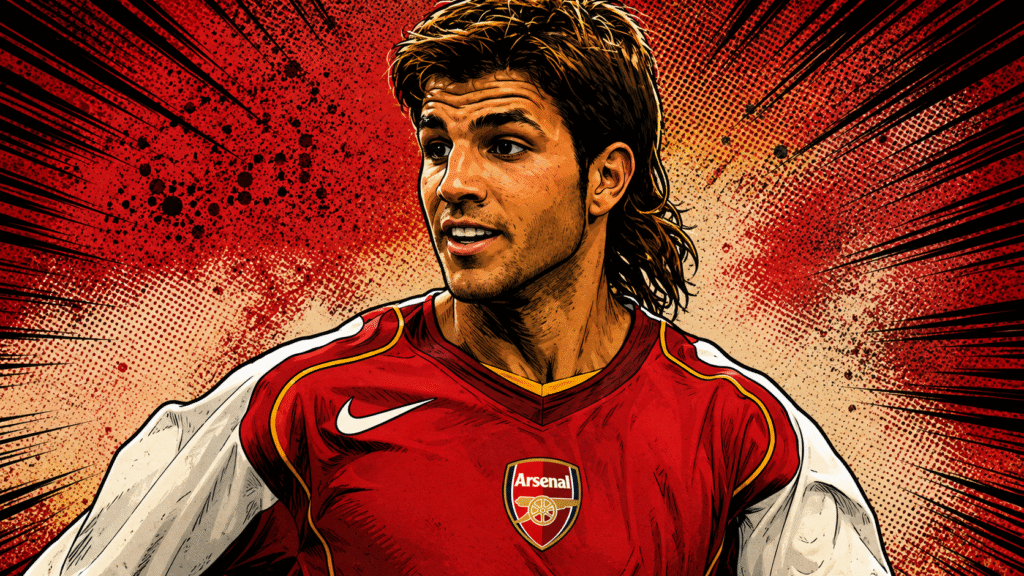
Arsenal can also boast a long history of developing incredible young talents. Arsène Wenger gave opportunities to several future Premier League legends, and Cesc Fàbregas is perhaps the greatest example.
The Spaniard became Arsenal’s youngest-ever player at the age of 16 years and 177 days when he debuted in the League Cup. In the same competition, he also became the club’s youngest goalscorer after scoring in a 5–1 victory over Wolverhampton Wanderers. During the 2004/05 season, he made his Premier League debut after injuries to Patrick Vieira, Edu and Gilberto Silva opened the door for him.
Fàbregas later reached the FA Cup final, the League Cup final and the UEFA Champions League final with Arsenal before eventually becoming club captain and securing a move back to his hometown club, Barcelona. Several years later, he returned to the Premier League with Chelsea, where he won the league title twice, alongside multiple domestic trophies and the UEFA Europa League. With Spain, he became both a World Cup and European champion — a true legend of English and Spanish football.
Another Arsenal midfielder was not as fortunate. Jack Wilshere produced a memorable 2010/11 season, famously dominating Barcelona’s midfield in the Champions League Round of 16. He was named Young Player of the Season and, at the time, was also Arsenal’s youngest first-team debutant at 16 years and 256 days. However, injuries and disciplinary issues quickly brought an end to such a promising career, with Wilshere retiring at only 30 years old.
His former teammate Theo Walcott experienced a similar fate. The pacey winger became the youngest player in the history of the England national team at 17 years and 75 days old. After debuting for Southampton at 16, Walcott rapidly rose to prominence and caught the attention of Arsène Wenger, who brought him to Arsenal. Fabio Capello even selected him for England’s 2006 World Cup squad.
That represented enormous physical and psychological pressure for such a young player. Although Walcott’s Arsenal career cannot be described as a failure, the expectations surrounding him were certainly far greater.
Nowadays
Europe’s top leagues continue to produce elite talents at a pace we may never have seen before.
Lamine Yamal is arguably the new superstar of world football. Barcelona’s wonderkid is confidently following in the footsteps of his famous predecessor wearing the number 10 shirt and, so far, he has fully justified the enormous expectations surrounding him.
The key now will be maintaining the same rate of development while avoiding injuries and off-field distractions — issues Yamal has already encountered in recent months. If he succeeds, even Lionel Messi’s record of eight Ballon d’Or titles could eventually come under serious threat.
In Madrid, however, many would strongly disagree with that statement, placing their hopes instead on Jude Bellingham, Arda Güler, Franco Mastantuono and Endrick.
Meanwhile, Erling Haaland continues to rewrite history with Manchester City. His goals almost no longer surprise anyone. He keeps breaking record after record, and fans have become accustomed to his incredible consistency over the years. He has already conquered club football — now the focus turns to what he can achieve on the international stage.
The Premier League also has a new youngest goalscorer in its history — Max Dowman of Arsenal. His teammate Ethan Nwaneri currently holds the record for the youngest player in Premier League history, while the future of Myles Lewis-Skelly also looks incredibly bright.
To that list, we can also add names such as Rio Ngumoha, Nico O’Reilly, Kobbie Mainoo, Warren Zaïre-Emery, Yan Diomande, Désiré Doué and Lennart Karl.
The most important factor in the development of all these talents will be their ability to stay healthy for as long as possible. Given the enormous demands placed on modern footballers, physical conditioning and mental health now appear to be the two biggest factors separating success from failure.