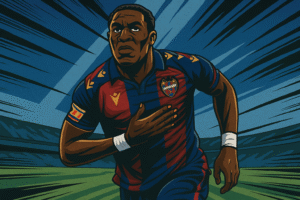
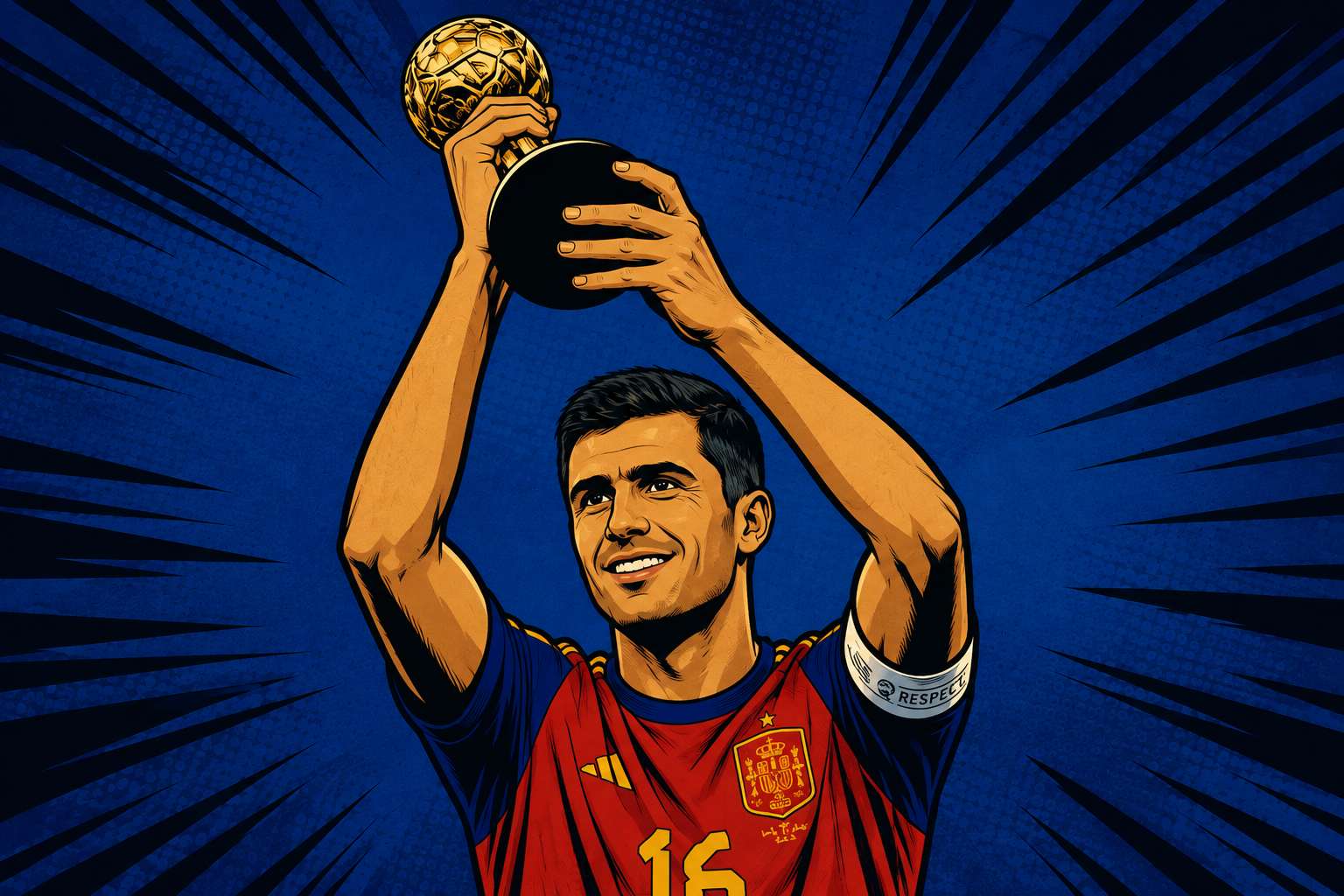
Another emotional football summer has come to an end. This World Cup had everything—stunning goals, shocking upsets, heartbreaking disappointments, political controversy, new innovations, physical battles, and, of course, a new world champion.
La Furia Roja deservedly lifted their second World Cup trophy, leaving virtually no chance for their opponents and conceding just a single goal throughout the entire tournament.
So, what were the defining moments of the 2026 FIFA World Cup? Let’s count them down.
10. Africa’s Rise
When FIFA confirmed that this World Cup would feature a record-breaking 48 teams, many questioned whether expanding the tournament was really necessary. Well, perhaps the African nations answered that question better than anyone.
A remarkable nine out of the ten African representatives reached the knockout stage, setting a new tournament record. Egypt came within minutes of eliminating defending champions Argentina in one of the tournament’s most controversial matches, while Morocco once again proved that their outstanding 2022 campaign was no fluke.
The biggest surprise, however, came from Cape Verde. With a population of barely 600,000 people, the island nation became the only team not to lose against either of the two finalists during normal time. Whether African football can maintain this impressive momentum remains to be seen, but one thing is already clear—the continent has never looked stronger on the world stage.
9. The Biggest Group Stage Disappointments
African nations were responsible for many of the tournament’s biggest surprises, but several traditional football powers left their supporters deeply disappointed.
Uruguay, led by Marcelo Bielsa, was arguably the greatest disappointment of the group stage, alongside Turkey. Real Madrid stars Federico Valverde and Arda Güler found themselves heading off on their summer holidays much earlier than expected.
Saudi Arabia’s rapid rise at club level failed to translate into success for the national team, despite their famous victory over eventual champions Argentina at the previous World Cup.
The Czech Republic also endured a miserable campaign, collecting just a single point before making an early exit—even though many had tipped them to progress from the group, at least as one of the best third-placed teams.
8. The Power of the Vikings
One team impressed everyone throughout the tournament—although many expected exactly that from them.
Norway’s “Vikings” stunned Carlo Ancelotti’s Brazil, while England came dangerously close to suffering the same fate. Erling Haaland once again performed at his usual world-class level, finishing the tournament with seven goals. Martin Ødegaard, freed from many of the defensive responsibilities he carries at club level, was once again allowed to showcase his extraordinary creativity. Goalkeeper Ørjan Nyland produced several unbelievable saves against Brazil, while Andreas Schjelderup looks set to become Norway’s next rising star, with Europe’s biggest clubs expected to battle for his signature this summer.
The future looks incredibly bright for Norway, and lifting a major international trophy no longer feels like an impossible dream.
7. Cristiano Ronaldo’s Last Dance
Portugal arrived at the tournament as one of the dark horses to win it all. Roberto Martínez had assembled an exceptional squad: a brilliant midfield, a reliable goalkeeper, a solid defensive line and, of course, Cristiano Ronaldo.
But did the five-time Ballon d’Or winner ultimately become more of a burden than an asset on the pitch? We’ll never know. His achievements are beyond debate—five Champions League titles, a European Championship, league titles in England, Spain and Italy, and perhaps soon the first player ever to score 1,000 career goals.
Yet there were moments during this World Cup when Ronaldo looked just a fraction slower than the modern game demands—and, at his age, that is perfectly understandable. Sooner or later, one of football’s greatest careers will come to an end. At the moment, Portugal still appears to have no true successor capable of replacing him. His determination has never been in question, but there comes a point when even legends can no longer influence matches the way they once did.
Then again, when it comes to Cristiano Ronaldo, nothing should ever be ruled out.Perhaps one more World Cup appearance—on home soil in 2030—is still possible.
6. Germany and the Netherlands – Disappointing Today, Hopeful for Tomorrow
Two of world football’s biggest giants saw their World Cup campaigns end much earlier than expected. The biggest concern, however, was not the elimination itself, but the manner in which it happened.
Germany suffered a dramatic penalty shootout defeat to a resilient Paraguay side—the first time in the nation’s history that they had been eliminated from a World Cup on penalties. The talent is undoubtedly there. Florian Wirtz, Jamal Musiala, Lukas Nmecha and Aleksandar Pavlović provide an exciting foundation for the future. What Germany lacks, however, is its traditional identity—that overwhelming feeling that the famous German machine is closing in and that there is simply no escaping it. Kai Havertz is an excellent footballer, but he is not Gerd Müller or Miroslav Klose. Jonathan Tah is not Franz Beckenbauer.
The midfield no longer possesses the commanding presence once offered by Lothar Matthäus, Bastian Schweinsteiger or Toni Kroos. Manuel Neuer is approaching the final chapter of his career, and no obvious successor has emerged. Germany has lost part of its footballing identity, and Julian Nagelsmann ultimately paid the price with his job. Could Jürgen Klopp be the man to restore Germany to its former glory? Time will tell.
The Netherlands experienced a similar fate, losing on penalties to an excellent Morocco side. The Dutch actually played attractive football throughout the tournament. Their attacking style, organized defense and talented midfield offered plenty of reasons for optimism. Yet, once again, something was missing. The days of Wesley Sneijder, Arjen Robben and Robin van Persie now feel like a distant memory. Virgil van Dijk continues to perform at the highest level, but, like Neuer, he is approaching the twilight of his career. Defensively, the Dutch remain strong, with Micky van de Ven, Jan Paul van Hecke, Jurriën Timber and Denzel Dumfries, while Bart Verbruggen has established himself as one of the world’s highest-rated goalkeepers. Frenkie de Jong and Ryan Gravenberch complement each other perfectly in midfield, but they are not Ruud Gullit and Frank Rijkaard.
The biggest weakness, however, lies in attack. Cody Gakpo, Donyell Malen and Crysencio Summerville are all talented players, but they are still a long way from reaching the standards once set by Ruud van Nistelrooy and Dennis Bergkamp. As for Johan Cruyff… his name speaks for itself. The Netherlands are also expected to appoint a new head coach in the coming months, with Arne Slot emerging as the leading candidate.
5. The Hosts Rose to the Occasion
In recent years, World Cup hosts have rarely been among the tournament’s standout performers. This time, however, things were different.
Mexico once again embodied everything fans have come to expect from El Tri—relentless determination, passion until the final whistle, and unforgettable moments at the iconic Azteca Stadium. They topped their group with three wins from three matches and came within minutes of forcing extra time against England. Javier Aguirre once again had his team perfectly prepared, both physically and tactically.
The United States finally looked like a team with a clear identity and a well-defined style of play. Mauricio Pochettino deserves enormous credit for that transformation, and this young American side appears to have an exciting future ahead of it.
Canada also continued writing its footballing story by reaching the knockout stages of the World Cup for the first time. Only the experience of Morocco prevented them from going even further. Nevertheless, it feels as though the Maple Leafs’ best years are still to come.
4. Lionel Messi’s Role
At 39 years old, Lionel Messi added yet another remarkable chapter to his legendary career.
Although he fell short of winning a second World Cup title, the Argentine was once again the driving force behind La Albiceleste. Arguably, only Rodri and Pau Cubarsí performed at a higher level throughout the tournament.
Messi’s role in this World Cup was very different from previous editions. Rather than leading the press, he operated as a deep-lying playmaker, regularly dropping into midfield to collect possession and orchestrate Argentina’s attacks. Time and again, he delivered the decisive pass before the decisive moment, finishing the tournament with four assists.
He also scored eight goals, second only to Kylian Mbappé in the Golden Boot race. The entire Argentine squad seemed willing to sacrifice everything for their captain. That collective commitment perhaps limited the influence of players such as Julián Álvarez, who took on far greater defensive and pressing responsibilities.
Even so, Argentina fully embraced this tactical approach—and it carried them to yet another World Cup final.
3. Defence – Football’s New Winning Formula
Towards the end of the club season, one debate dominated football discussions.
Did Arsenal truly deserve the Premier League title? Was their style of football actually enjoyable to watch? And, perhaps most importantly, is this approach sustainable in the long term? Many supporters argued that Arsenal were far from the most entertaining team in England this season. Yet one fact is impossible to ignore. Their style delivered the club’s first league title in 22 years, as well as appearances in both the League Cup and Champions League finals. There were matches in which opponents barely looked capable of registering a single shot on target, let alone scoring. Arsenal’s defensive organization was simply that dominant. Although the Gunners’ defensive numbers declined slightly during the second half of the campaign, the overall feeling of stability and control never disappeared.
Spain demonstrated something remarkably similar at this World Cup. La Furia Roja conceded just one goal throughout the tournament. Of course, there are significant stylistic differences between Spain and Arsenal. Spain dominate possession, denying opponents the ball and dramatically reducing the number of dangerous situations they face. Arsenal, on the other hand, are perfectly comfortable allowing opponents to control possession before patiently defending inside their own half.
Different philosophies—but the same objective. Neither side is interested in winning spectacular goal-fests. Both prioritize defensive stability over attacking flair.
It is an approach that echoes Italy’s 2006 World Cup-winning side far more than Brazil’s free-flowing teams, France’s 2018 champions or Germany’s relentless 2014 machine.
The low block continues to grow in popularity across modern football. The coming years will reveal just how dominant this tactical trend can become.
2. Rodri Stands Above Everyone Once Again
Few people believed Rodri would ever return to the level that earned him the Ballon d’Or.
After suffering a devastating injury against Arsenal a few seasons ago, the Spaniard spent a long period on the sidelines. More injuries followed, repeatedly interrupting his rhythm. Yet somehow, he came back stronger. Once again, Rodri established himself as the best midfielder in the world.
His influence on Spain’s success was immense. He brought calmness whenever his team needed it, remained outstanding defensively and was almost flawless in possession. Every Spanish attack seemed to pass through him, regardless of which side the move developed from.
It is no surprise that, immediately after the World Cup, speculation surrounding a move to Real Madrid intensified. And with performances like these, such a transfer feels increasingly realistic.
1. The Team Comes Before Everything
Football has always been, and always will be, a team sport. This World Cup reminded us of that more than ever.
France’s extraordinary collection of attacking stars was not enough on its own to deliver another world title. That became particularly evident in the final against Spain, where one complete team faced eleven outstanding individuals.
Argentina, driven by the leadership of Lionel Messi and the relentless determination of every player on the pitch, reached yet another World Cup final, even if they ultimately fell short.
Morocco and Paraguay eliminated opponents with far greater reputations, while Norway—with stars such as Erling Haaland and Martin Ødegaard—managed to overcome Carlo Ancelotti’s Brazil, the most successful nation in World Cup history.
Then there was Cape Verde. Their remarkable campaign will be remembered for years to come. The island nation became a perfect example of what teamwork, discipline and collective spirit can achieve.
Without question, this World Cup will be remembered as one of the most controversial—and one of the most unforgettable—in football history.
The tournament featured a record number of participating nations. Some countries wrote the greatest chapter in their footballing history, while others will want to forget this summer as quickly as possible.
The next four years promise to change the international football landscape once again. And if this tournament was any indication, the next World Cup could be even bigger, even bolder, and even more unforgettable.